
I use two AI coding tools every day. One I chose. One my employer pays for. This is about the second one, and about what you actually learn when you run the same model through two different harnesses.
The tool is Kiro, specifically Kiro CLI rather than the Kiro IDE, and I want to be upfront about why it is on my machine at all: it is discounted through my company's AWS spend and I am not the one paying. That is not a recommendation. It is the most common reason anybody uses any enterprise developer tool, and pretending otherwise would be dishonest.
Why the CLI and not the IDE
Kiro ships as an IDE, a CLI, a web interface and now a thing called Crew. The IDE is the flagship, and it is where the spec-driven workflow is best presented.
I have no intention of moving off VS Code. I have years of muscle memory, extensions I rely on, and settings I have forgotten I configured. The value an AI tool would have to add to justify relearning an editor is enormous, and no coding assistant currently clears that bar. Not Kiro, not Cursor, not anything.
So the CLI is the only version I would ever have installed. It runs in the terminal, sits next to the editor I already use, and asks nothing of my setup. If Kiro were IDE-only I would not be using it, discount or not.
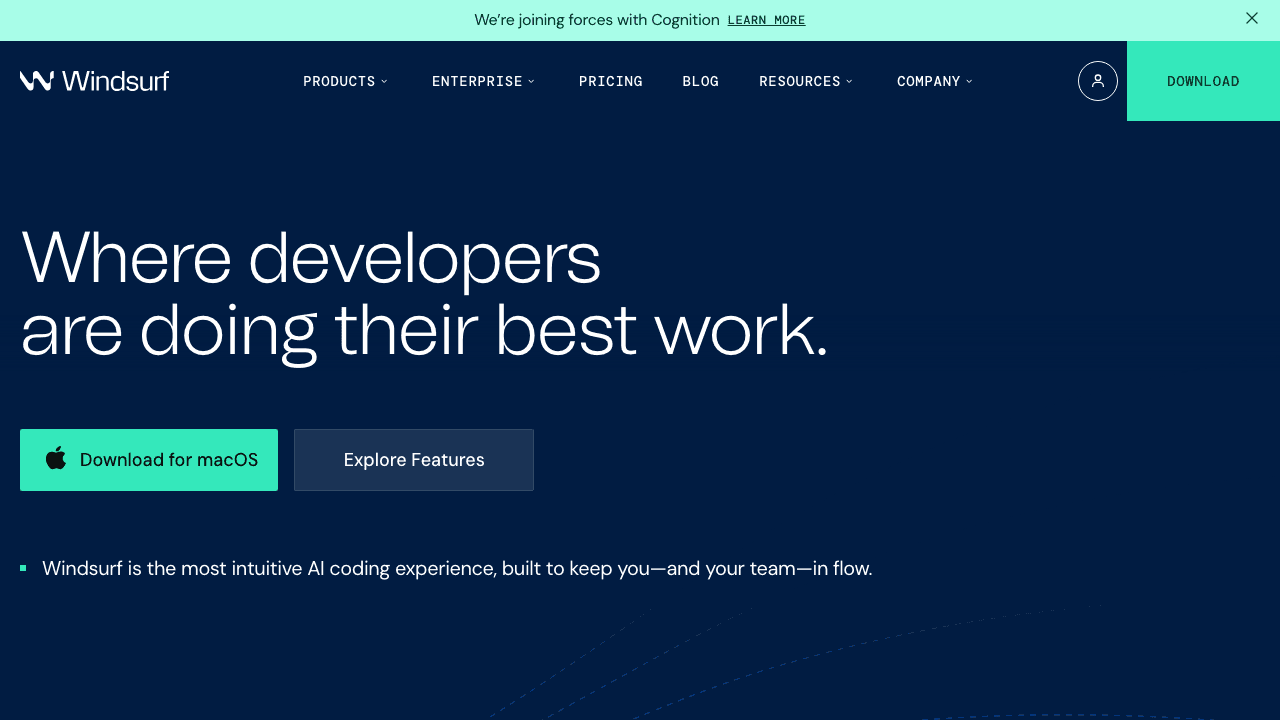
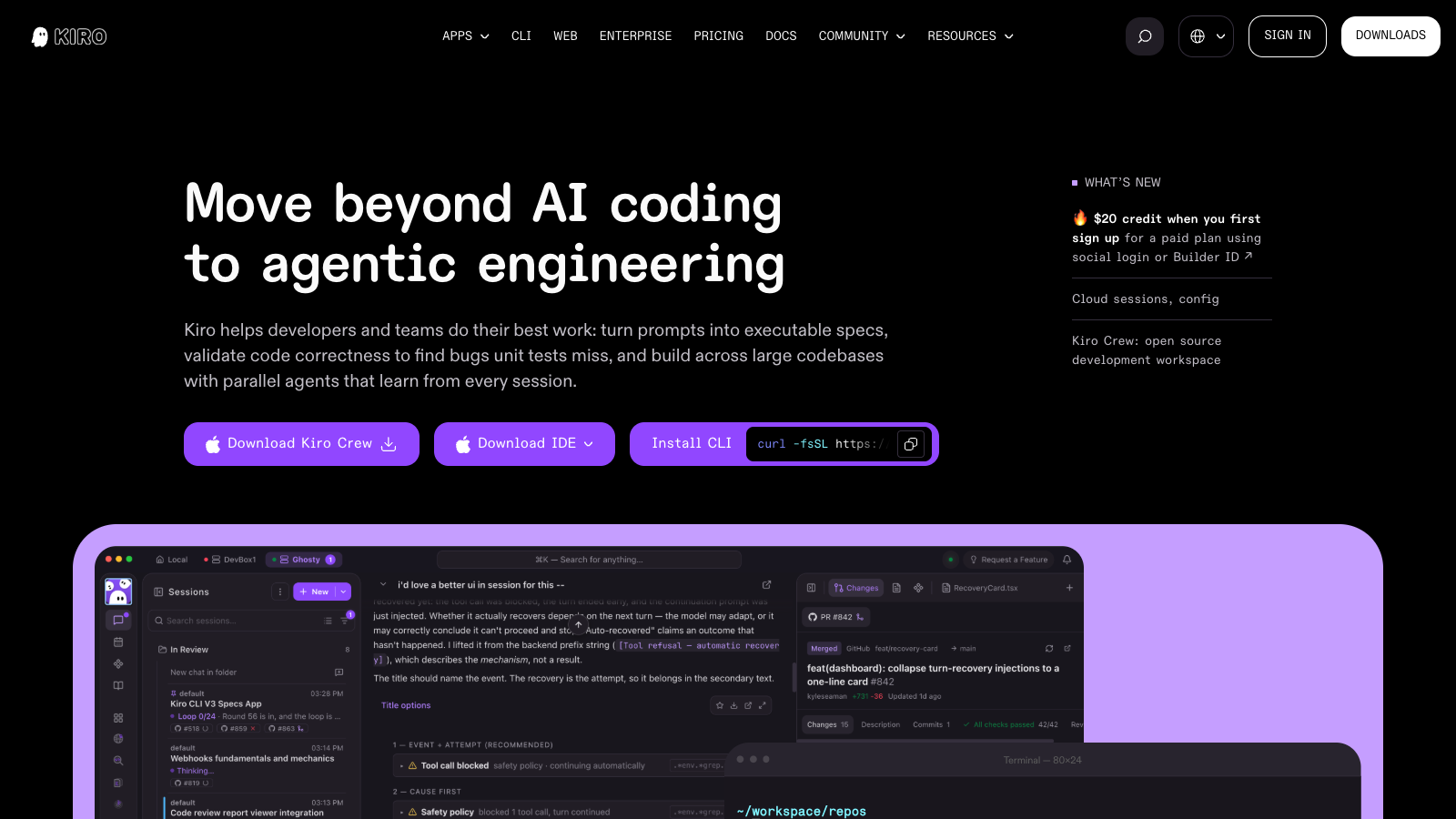
To their credit, Kiro seems to know this. Look at the hero above: "Install CLI" sits as a peer to "Download IDE", with the curl command right there in the button rather than buried three clicks into the docs. The CLI has its own top-level nav item and its own version number, currently 3.0. This is not a companion utility shipped as an afterthought.
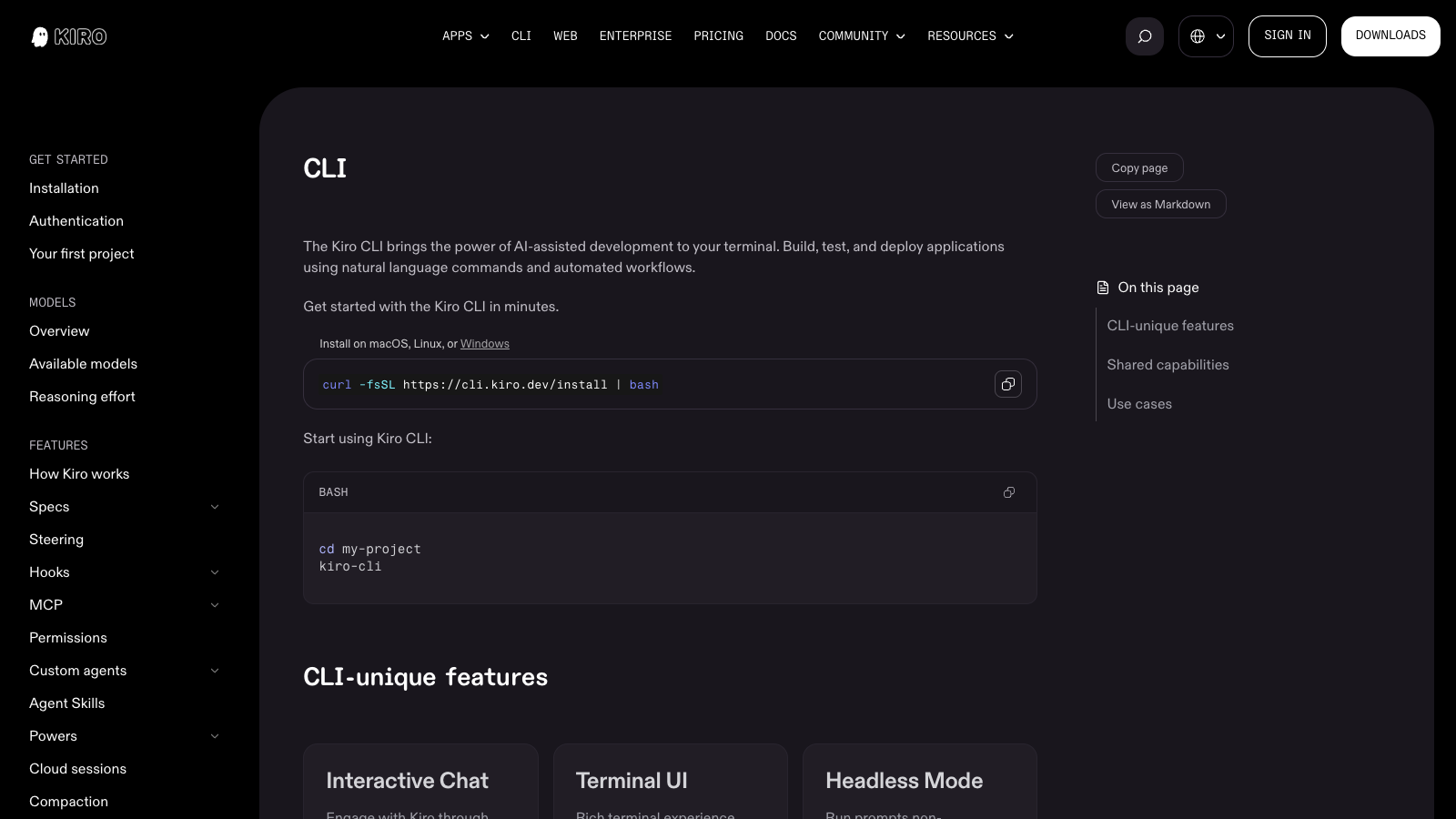
Install is one line, then kiro-cli inside a project directory. The docs list features that only exist in the CLI: a terminal UI, headless mode for CI, voice mode. That is worth saying to anyone building these tools, because for a large group of us the CLI is not the lesser version, it is the only version that is adoptable at all.
Both of them are running Opus
Here is the part that makes the comparison interesting rather than a preference.
I run Claude Opus in Claude Code on my personal account, and I run Opus through Kiro CLI on the company one. Same model. Same weights. Same reasoning.
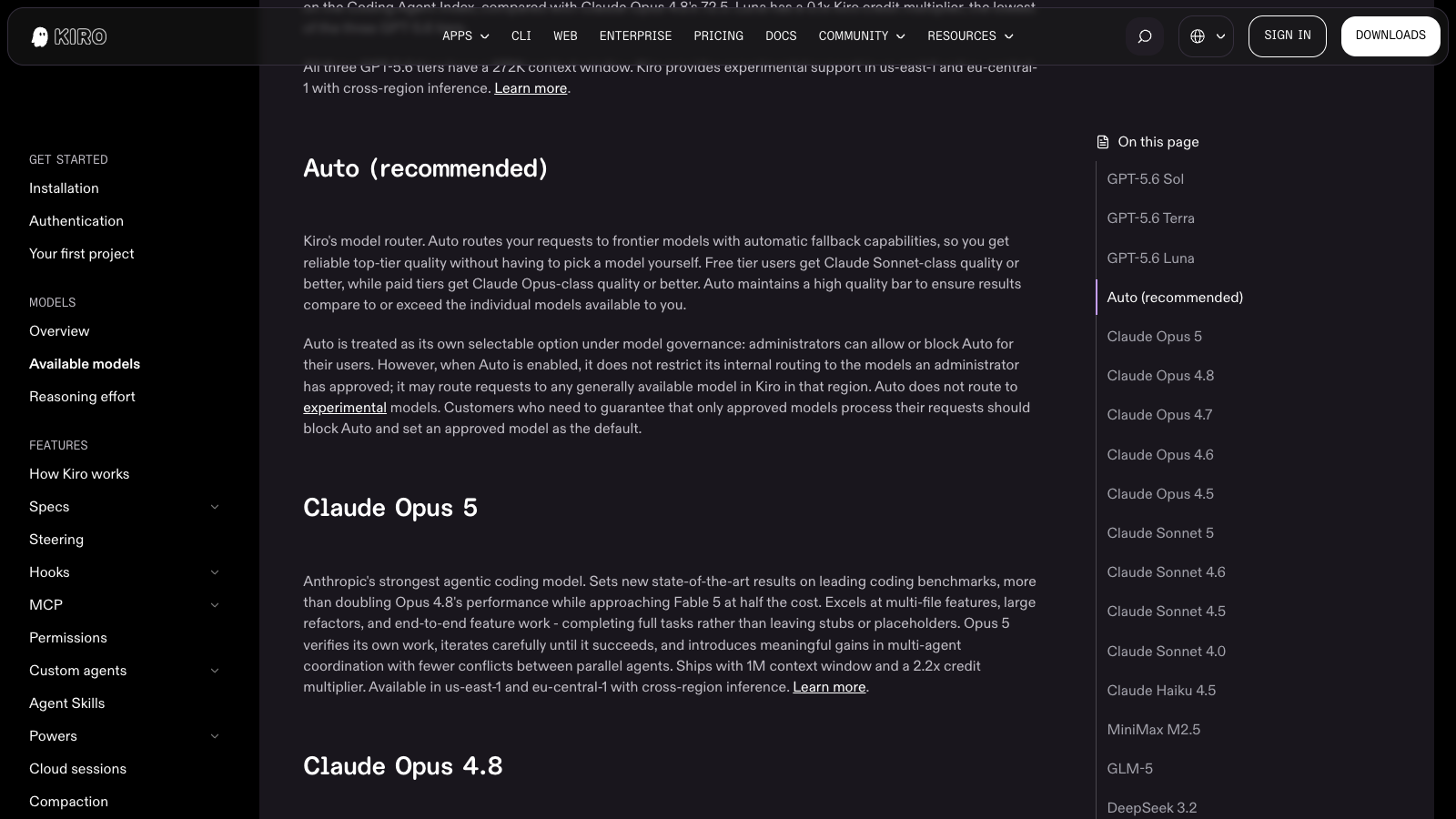
This is not me assuming. Kiro documents Claude Opus 5 as a selectable model with a 1M context window, alongside a menu that runs from GPT-5.6 down through open weight models like DeepSeek and Qwen. Pick Opus in both tools and the thing answering you is the same thing.
Which means when I notice a difference between the two, the model is not the variable. What I am comparing is everything around it: how the tool builds context, how it streams output, how it handles a long task, how quickly it starts doing something after I hit enter. The harness, not the intelligence.
Most comparisons of AI coding tools are really model comparisons wearing a costume. This one cannot be, and that turns out to be clarifying.
What I actually notice
They are more alike than different. If you dropped me into a session with the branding removed, most of the time I could not tell you which one I was in. Both take a prompt, work across files, explain what they did. The gap between AI coding tools in 2026 is much smaller than the marketing suggests, particularly when the model underneath is identical.
Kiro feels sluggish at times. This is the one consistent difference. There are moments, usually at the start of a task or partway through something long, where it sits there and Claude Code would already be moving. I want to be careful about this claim: I have not benchmarked it, I am describing a feel, and feel is exactly the kind of thing that is subject to my own expectations. But it is consistent enough that I notice it, and I notice it in the direction of Claude Code being faster.
The spec-driven workflow is real but not free. Turning a prompt into requirements and a task list before writing code is genuinely useful on work that spans several files. On a small change it is overhead, and I skip it. That is not a criticism, it is what the feature is for.
The part I do not feel, because I am not paying
Kiro does not sell seats with a usage allowance in the way Claude Code does. It sells credits, and every model spends them at a different rate.
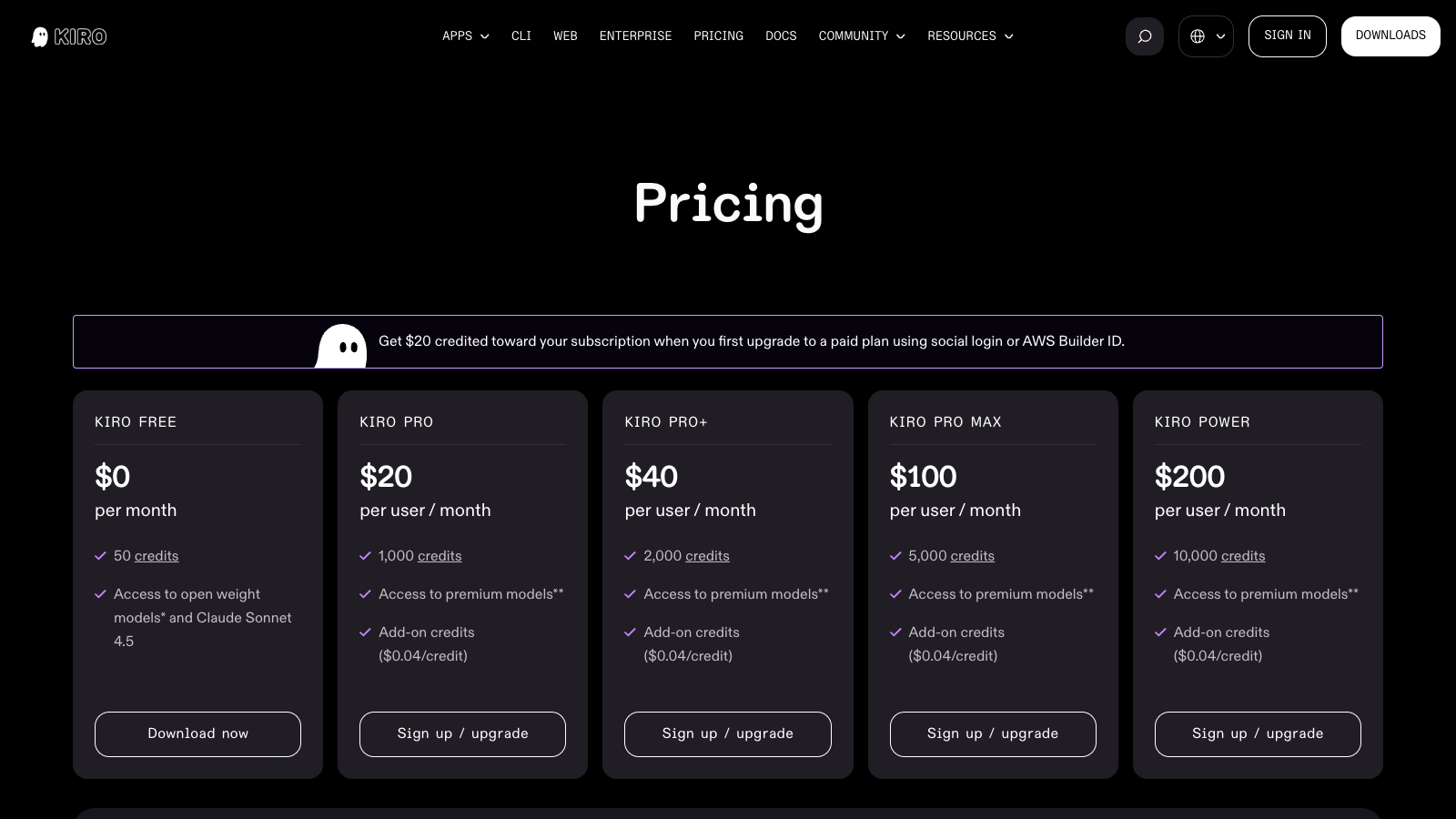
Opus 5 carries a 2.2x credit multiplier. GPT-5.6 Luna carries 0.1x. So the model I use by default burns the budget roughly twenty two times faster than the cheapest option on the menu, and add-on credits run $0.04 each once the monthly allocation is gone. The free tier does not include Opus at all, only Sonnet 4.5 and the open weight models.
I notice none of this, because the bill is not mine. That is worth stating plainly in a review, because it is the single biggest difference between my experience of this tool and yours. Someone paying $20 a month out of their own pocket is making a constant decision about whether this task deserves the expensive model. I never make that decision. I always pick Opus. Any judgement I offer about Kiro is a judgement made without the constraint that would shape most people's use of it.
What this means if you are choosing
If your company is paying, particularly if you already have AWS spend, Kiro is a perfectly reasonable thing to have. It is competent, it runs the model you want, and the CLI stays out of your editor's way. I would not fight to remove it.
If you are paying personally, I do not think this is the one I would pick. Claude Code feels quicker for the same model, and speed compounds over a working day in a way that features do not. The credit multipliers also mean the honest price of using Opus on Kiro is not the sticker price, and you would feel that in a way I do not.
The summary is that my choice was made by a procurement decision rather than by me, which is how most enterprise tooling arrives. What surprised me is how little that costs. Five years ago being handed the corporate tool meant a real downgrade. Now the model is the product, and the model is the same one.
That is a good thing for developers and an uncomfortable one for tool vendors, because if the intelligence is a commodity, all that is left to compete on is how the thing feels to use. Which is why the sluggishness is the only note I have that actually matters.