

Amp vs Cursor used to be a question about how you like to work. In February I used both for a month and settled it the way a lot of people do: Cursor for quick edits, Amp for refactors that touch many files. Since then Cursor became part of SpaceX, and its plans now come bundled with X and Grok. If you want Claude or GPT as your coding model, the question has turned into who pays for the tokens.
I have not used either tool since those changes, so this post covers plans and prices, not output quality. I read every price on cursor.com/pricing and ampcode.com/pricing on 13 November 2026.
Cursor's plans now come with X
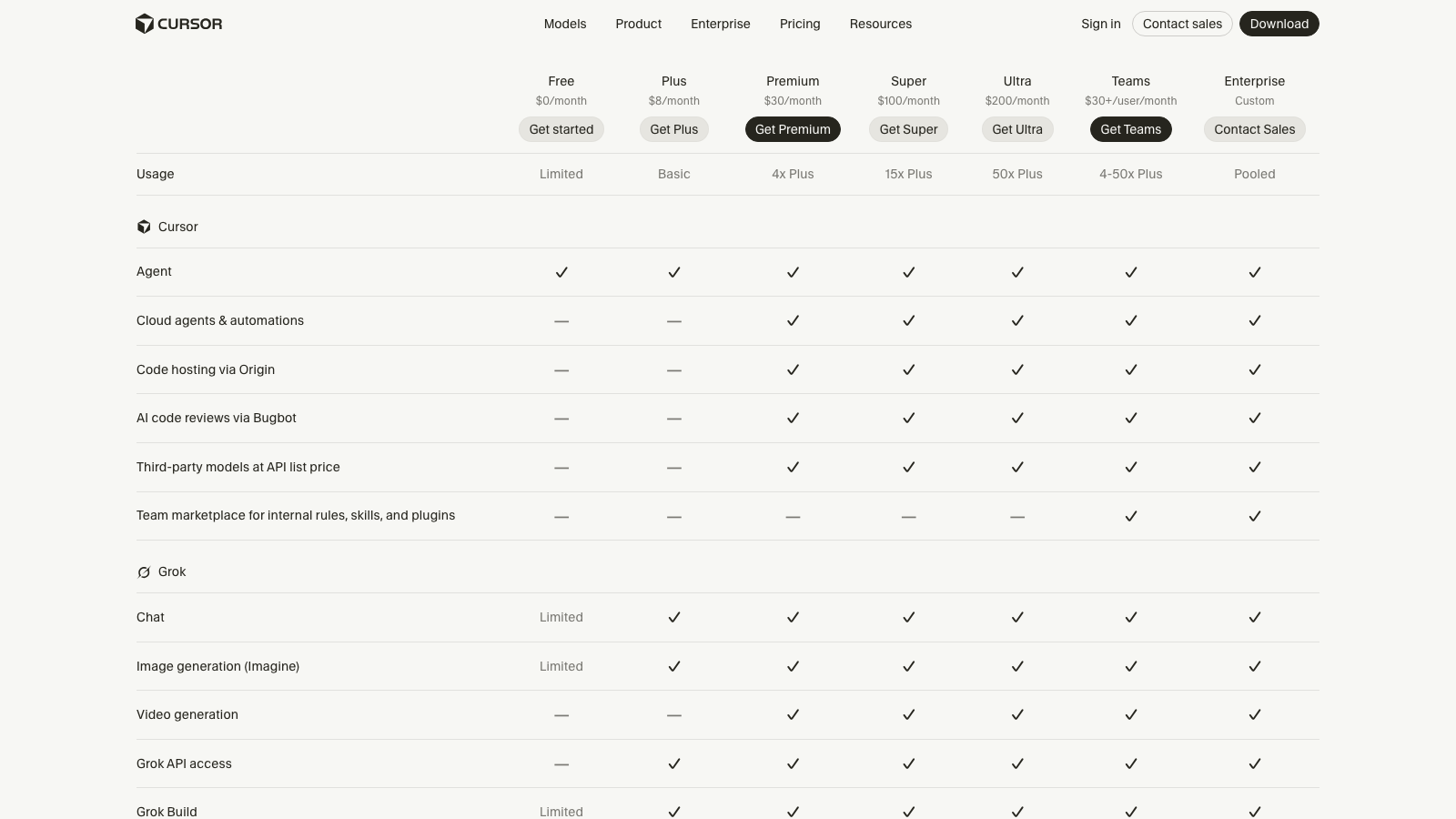
Cursor announced on 14 August 2026 that SpaceX had acquired it, finishing a process that started in April with a partnership to train models together. The pricing page shows what that means for you. Every plan mixes Cursor features with Grok and X features, and the cheapest paid plan only runs Grok.
- Free: limited agent and chat requests.
- Plus, $8 a month: the Cursor agent, Grok chat, image generation and API access. Only Grok models are available on this plan. It also gets you an X premium checkmark and fewer timeline ads.
- Premium, $30 a month: 4x the usage of Plus, plus cloud agents and automations, code hosting through Origin, AI code reviews through Bugbot, and third-party models at API list price.
- Super, $100, and Ultra, $200: 15x and 50x the usage of Plus.
- Teams: from $30 per user per month.
The footnote matters most. "Third Party model usage in Cursor is not included in the monthly prices shown and must be purchased separately." So Claude or GPT in Cursor costs your plan price plus metered usage at API rates. Your plan's usage multiplier covers Grok.
Amp lets the plan you already pay for cover the tokens
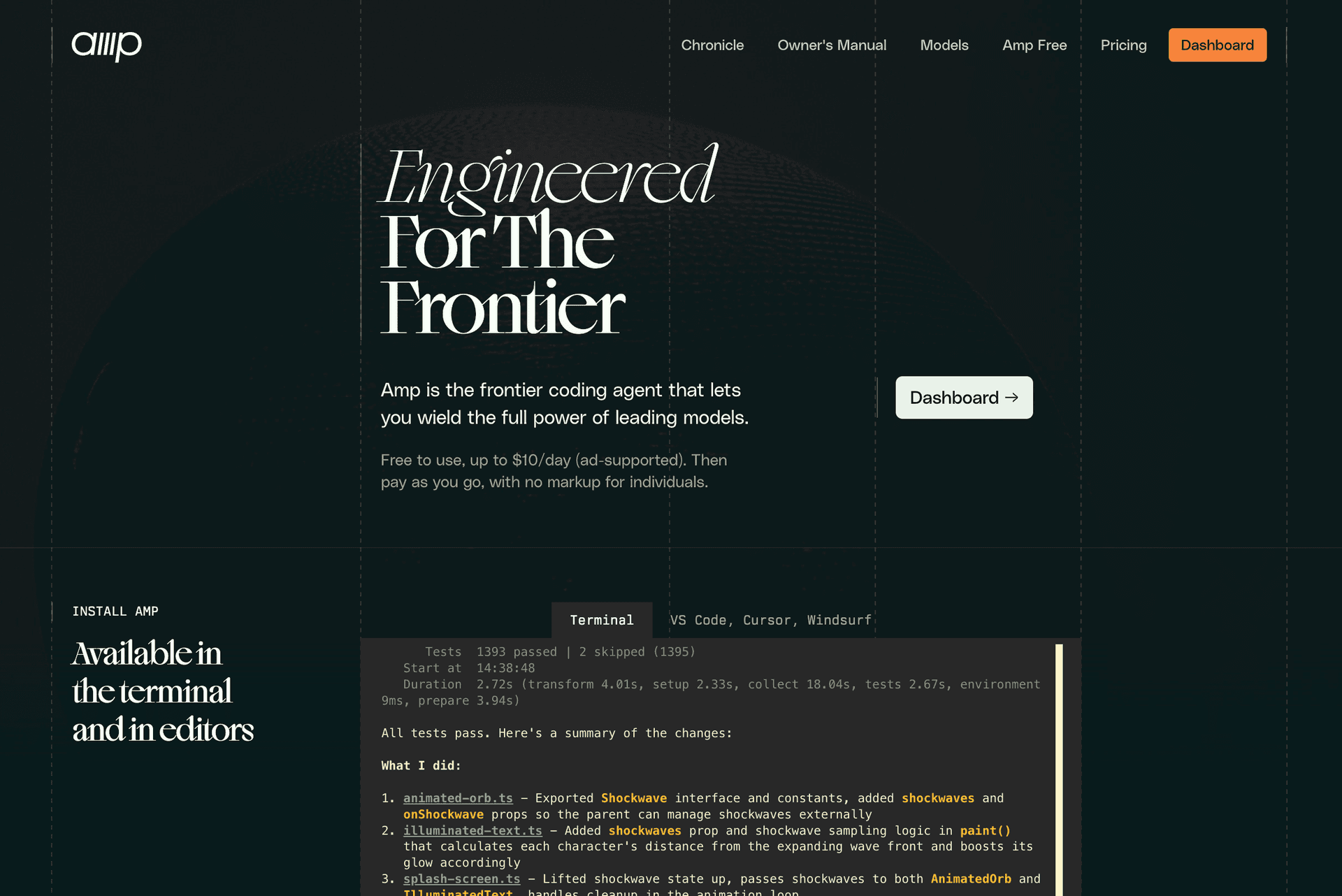
Amp's Hobby tier is free. You bring your own ChatGPT or Claude subscription, or an API key, and Amp charges no token fees on top. Link a Claude plan and every Claude model you pick in Amp's model selector bills to that plan, inside its normal usage limits. What you pay Amp for is compute: orbs, its cloud machines that run agents after you close the laptop, billed by the minute or covered by the $20 Megawatt plan.
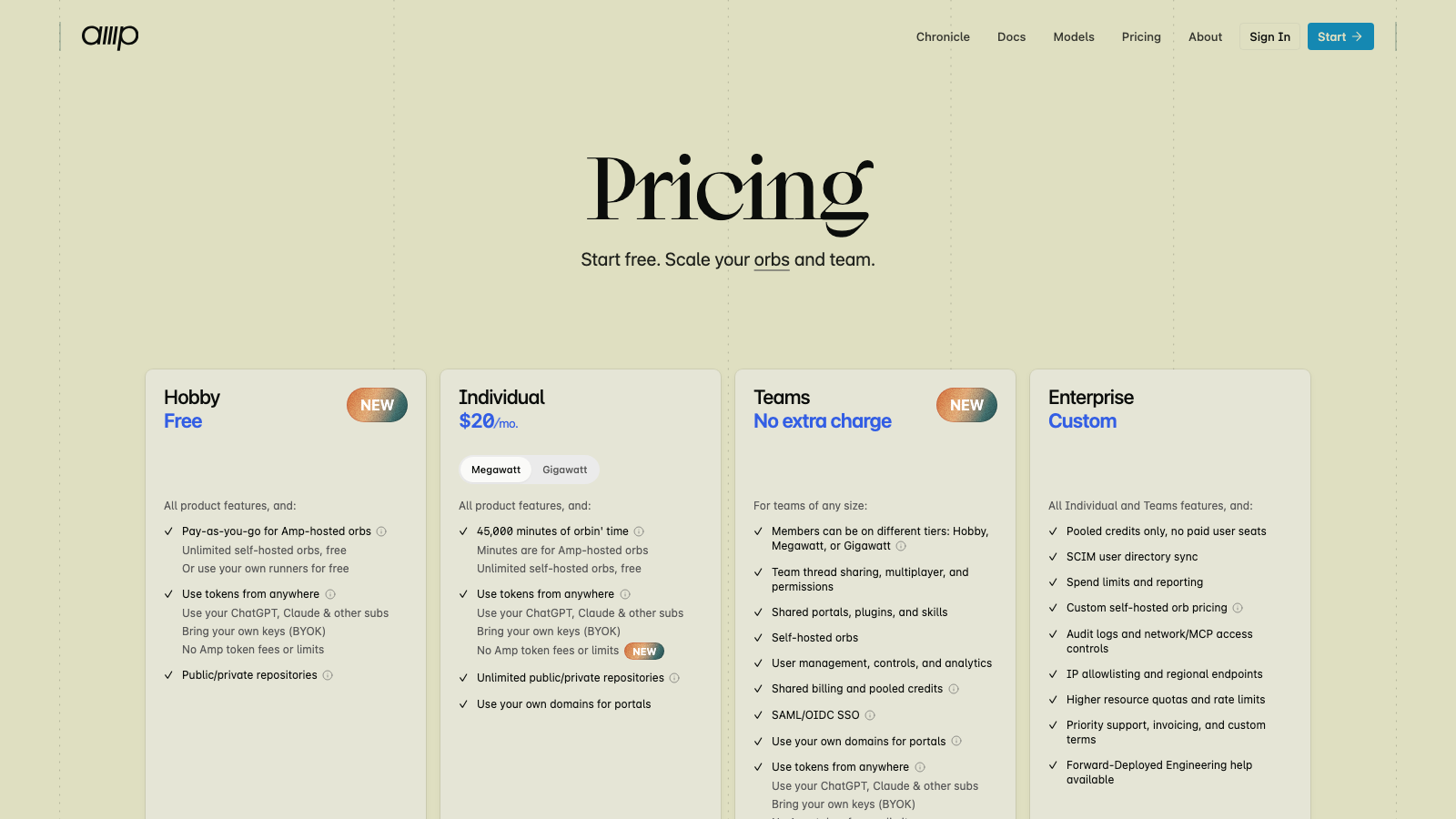
Ampcode pricing 2026 has the full orb rates and the Claude plan rules.
Amp vs Cursor, priced by the model you want
The cheapest way into each tool depends on which model you want to run. The monthly totals below are list prices for one developer, working on your own machine with no cloud agents. The arithmetic is mine.
| The model you want | Cursor | Amp |
|---|---|---|
| Grok only | Plus, $8 | Amp's models page lists Grok, but I could not confirm how Amp bills it |
| Claude, with a Claude plan you already have | Premium $30, plus Claude usage at API list price | Hobby $0, billed to your Claude plan |
| Claude, starting from nothing | Premium $30, plus Claude usage at API list price | Hobby $0 plus Claude Pro, $20 |
| GPT, with a ChatGPT plan you already have | Premium $30, plus GPT usage at API list price | Hobby $0, billed to your ChatGPT plan |
| Cloud agents that keep running | Premium $30 and up | Orbs by the minute, or Megawatt $20 |
On these numbers Amp is cheaper for anyone who wants Claude or GPT and already pays for one of those plans. Cursor is the cheaper start for anyone happy with Grok, at $8. The Cursor rows with API usage have no ceiling, and Cursor's pricing page does not estimate them, so a heavy month is hard to budget in advance.
Two caveats. Your Claude or ChatGPT plan has its own usage limits, and Amp's docs say Claude models served from your plan start responding more slowly than the ones Amp serves. And in Cursor the Premium price buys more than tokens: Bugbot reviews and Origin code hosting are on the plan.
How they felt to use, back in February
My notes from February still describe the split. In Cursor I was driving: inline suggestions and chat, with the model helping. Amp turned that around. The agent drove and I reviewed, and I ran it on a separate branch for refactors that touched many files. Amp had a steeper learning curve, because I had to know which agent and which mode fit each task.
Both products have moved toward each other since. Amp dropped its modes for a plain model selector on 12 November, and Cursor now has cloud agents and a CLI next to the desktop app. I have not re-tested either, so read the February split as a starting point, not a verdict. Should You Use Ampcode for Production Code? has the full month.
Which one I would pick now
- You only want the cheapest paid agent and Grok is fine: Cursor Plus, $8.
- You already pay for Claude or ChatGPT: Amp Hobby. It adds nothing to your bill until you use orbs.
- Your team wants an editor, cloud agents and code review on one invoice: Cursor Premium or Teams, and budget for third-party model usage on top.
- You do not want your coding plan tied to an X account: Amp. On Cursor's pricing page the X perks sit on Plus through Ultra, next to the coding features.
The Ampcode vs Cursor page lines up the two listings side by side.
FAQ
Amp vs Cursor: which is cheaper?
For Claude or GPT, Amp, if you already pay for a Claude or ChatGPT plan. Amp's Hobby tier is free and bills those models to your plan, while Cursor charges $30 for Premium plus third-party usage at API list price. For Grok, Cursor Plus at $8 is the cheapest paid option.
Can I use Claude in Cursor?
Yes, on Premium ($30) and above. Cursor bills third-party models such as Claude at API list price on top of the plan. Plus at $8 runs Grok models only.
Is Cursor owned by SpaceX?
Yes. Cursor announced on its blog on 14 August 2026 that SpaceX had acquired it, completing a process that began with a partnership in April.